
Maximising Space in a Small Home: Simple Solutions for Lighter Living
Living in a small home doesn’t mean you have to compromise on comfort, functionality or style. Whether you live in a compact flat in the city centre or a cosy terraced house in the suburbs, there are countless ways to make the most of your limited space. With thoughtful planning, clever storage ideas and strategic design choices, you can transform even the tiniest of homes into a spacious-feeling haven that meets all your needs by maximising space in a small home.
Here are some practical, achievable ways to maximise every square metre of your home, creating a space that feels open, organised and inviting. These solutions range from simple adjustments you can make today to more substantial projects worth considering if you’re ready for a change. The best part? Many of these ideas are budget-friendly and can be implemented without major renovations.
Understanding Your Space
Before deciding upon specific solutions, take time to thoroughly assess your current living situation. Understanding how you use your space – and how you’d like to use it – provides the foundation for all your space-maximising efforts.
Start by observing how you move through your home during a typical day. Which areas feel cramped? Where do you tend to accumulate clutter? Are there spaces that go unused? This analysis will highlight problem areas that need attention and potentially reveal underutilised spaces you can put to better use.
Consider keeping a small notebook handy for a week, jotting down frustrations with your space as they arise. Perhaps you constantly bump into a particular piece of furniture or maybe you’ve noticed that certain items never seem to have a proper home. These observations provide valuable insight into which space-saving solutions will make the biggest difference in your daily life.
It’s equally important to identify your priorities. Perhaps you work from home and need a functional workspace. Maybe you love entertaining and want to ensure you can comfortably host friends despite your limited square footage. Or perhaps storage is your primary concern. Knowing your priorities helps you make informed decisions about where to focus your efforts and resources.
Decluttering: The Most Effective Space-Creating Technique
No discussion about maximising space would be complete without addressing decluttering. Simply put, the fewer items you have, the more space you’ll have – and the easier it will be to organise what remains.
Begin by sorting your belongings into four categories: keep, donate, sell and discard. Be honest with yourself during this process. If you haven’t used an item in the past year and it doesn’t hold significant sentimental value, it’s likely a candidate for removal.
Focus on one area at a time to avoid feeling overwhelmed. Perhaps start with a single drawer, then move to a cupboard and gradually work your way through your entire home. This methodical approach makes the process manageable and allows you to see progress, which can be motivating.
Pay particular attention to items that tend to accumulate: books, clothing, kitchenware and paperwork are common culprits. Consider implementing a one-in-one-out rule moving forward; for every new item you bring into your home, an existing item must leave.
Remember that decluttering isn’t a one-time event but an ongoing process. Schedule regular sessions – perhaps quarterly – to reassess your belongings and prevent clutter from creeping back in.
Clever Storage Solutions for Small Spaces: Making Every Centimetre Count
Once you’ve pared down your possessions, the next step is finding homes for everything that remains. In a small space, creative storage ideas and smart storage solutions are essential. A top tip is to find storage furniture for small spaces as this will be both practical and functional.
Utilise Vertical Wall Space
Walls offer valuable real estate in small homes. Consider installing:
- Floating shelves above doorways, windows and furniture
- Wall-mounted cabinets in kitchens and bathrooms
- Pegboards for tools, kitchen utensils or craft supplies
- Hooks for hanging items like coats, bags and kitchen tools
- Wall-mounted bookshelves for books and decorative items
Look up – your ceiling might offer untapped potential. Solutions such as hanging pot racks in kitchens, suspended clothing racks in bedrooms and overhead storage in garages can free up considerable space elsewhere.
Maximise Existing Storage Spaces
Make your current storage work harder with these strategies:
- Add shelf risers in cupboards to double your storage surface
- Use drawer dividers to organise smaller items efficiently
- Install pull-out shelves in deep cupboards to improve accessibility
- Add hooks to the inside of cupboard doors for additional hanging storage
- Use compression bags for seasonal clothing and bedding
- Invest in stackable containers for pantry items and small belongings
Invest in Multifunctional Space Saving Furniture
When space is at a premium, each piece of furniture should earn its keep by serving multiple purposes:
- An ottoman storage bench provides both seating and storage
- A storage bed with secret compartments eliminates the need for a separate dresser
- An extendable dining table can be compact for daily use and expanded for guests
- Nesting tables can be spread out when needed and stacked when not in use
- A convertible sofa accommodates overnight guests without requiring a dedicated guest room
- A coffee table with concealed storage offers both style and functionality
Create Storage in Overlooked Areas
Many homes contain “dead spaces” that can be transformed into valuable spaces with the use of items such as compact storage containers, a wall-mounted bookshelf or a hanging clothing rack to help organise your belongings:
- The space under the stairs can house pull-out drawers or a compact workstation
- The area above the toilet in the bathroom is perfect for shelving
- The backs of doors can hold over-door organisers
- The space between the refrigerator and wall can accommodate a slim rolling pantry
- The tops of kitchen cabinets can store infrequently used items
Furniture Selection and Placement: Creating the Illusion of Space
The furniture you choose and how you arrange it significantly impacts how spacious your home feels.
Choose Appropriately Scaled Furniture
Oversized furniture can overwhelm a small space, making it feel cramped regardless of how it’s arranged. Look for:
- A sofas and chairs with exposed legs, which create a sense of openness
- Glass or acrylic tables that don’t visually block the space
- Armless chairs that take up less physical and visual space
- Low-profile furniture that doesn’t block sight lines
Remember that proper scale doesn’t necessarily mean tiny furniture – appropriately sized pieces that fit your space will look better and function more effectively than furniture that’s too small.
Consider Your Layout Carefully
The arrangement of your furniture can make or break your space:
- Pull furniture slightly away from walls to create a sense of spaciousness
- Arrange seating to facilitate conversation without blocking traffic flow
- Create zones within open-plan spaces using rugs or strategic furniture placement
- Ensure there’s a clear path through each room – at least 70-90 centimetres for walkways
Don’t be afraid to experiment with different arrangements. Sometimes, a simple furniture shuffle can completely transform how a room feels and functions.
Choose the Right Furniture for Your Needs
Some specific pieces of clever furniture for small spaces are particularly beneficial:
- A wall-mounted desk that can be folded away when not in use
- A drop-leaf table or fold-out dining table that can be expanded when needed
- Nesting tables that provide flexibility for entertaining
- A console table that can serve as a desk, an expandable dining table or a display surface
- A daybed that functions as a sofa during the day and a bed at night
- Modular furniture that can be rearranged to suit different needs
- An ottoman with hidden compartments to store bits and bobs
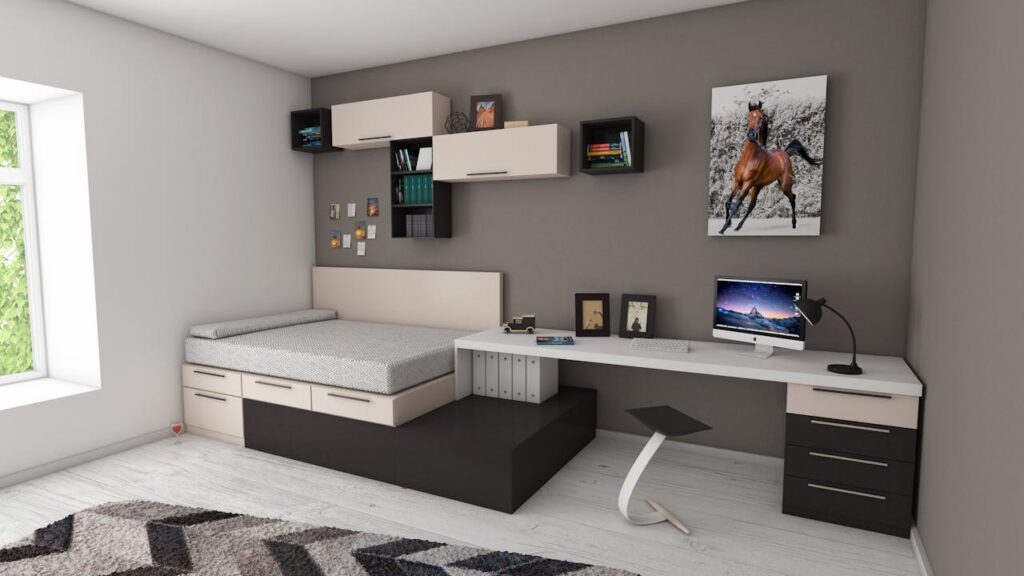
Light, Colour and Visual Tricks: Making Your Space Feel Larger
Physical space is only part of the equation when maximising space in a small home – how spacious your home feels is equally important. Strategic use of light, colour and design elements can create the perception of more space.
Make the Most of Natural Light
Natural light is one of the most effective ways to make a space feel open and airy:
- Keep window treatments minimal or opt for sheer curtains that filter light without blocking it
- Position mirrors to reflect windows, effectively doubling the natural light
- Consider replacing solid doors with glass or partially glazed versions to allow light to flow between rooms
- Keep furniture from blocking windows where possible
- Consider light-reflecting surfaces like glossy tiles or polished worktops
Choose Your Colour Palette Strategically
While dark colours can work in small spaces when used purposefully, generally:
- Light colours on walls and ceilings create an expansive feeling
- Monochromatic colour schemes produce a cohesive, spacious effect
- Painting walls, trim and ceiling the same or similar colours eliminates visual boundaries
- Continuing the same flooring throughout multiple rooms creates flow and visual expansion
Use Visual Tricks to Create Spaciousness
Certain design techniques can fool the eye into perceiving more space:
- Horizontal stripes on walls or floors draw the eye outward, making a room feel wider
- Vertical stripes on walls emphasise height, making ceilings feel higher
- Large-scale artwork can actually make a room feel larger than multiple small pieces
- Furniture with exposed legs creates a sense of lightness and air
- Transparent elements like glass tables or acrylic chairs take up less visual space
Smart Technology for Small Spaces
Modern technology offers excellent space-saving solutions for small-space living:
- A wall-mounted TV eliminates the need for a bulky entertainment centre
- Wireless speakers remove the need for large sound systems
- Smart home systems can control lighting, temperature and entertainment without additional hardware
- Compact appliances designed specifically for smaller homes offer full functionality in half the space
- Digital storage of books, music and films eliminates the need for physical media libraries
Room-by-Room Solutions
Each area of your home presents unique challenges and opportunities for maximising space in a small home.
Kitchen
Small kitchens can be highly functional with the right approach:
- Magnetic knife strips and utensil rails free up drawer and counter space
- Open shelving feels less bulky than wall cabinets and encourages curating visible items
- Cabinetry designed to conceal clutter is ideal for those items that need to stay out of sight
- A rolling cart can provide additional work surface and storage
- A wall-mounted dish rack saves worktop space
- Consider a smaller refrigerator if you frequently shop for fresh foods
Living Room
As a multi-functional space, the living room needs particularly thoughtful planning:
- Choose a sofa with the right proportions – often a smaller two-seater with a separate chair offers more flexibility than a large three-seater
- Use a trunk as a coffee table to incorporate storage
- Mount the TV on the wall and use floating shelves for components
- Multi-functional furniture is your friend; for example, a side table with drawers or shelves
- Consider floor cushions for additional seating that can be stored away
- Opt for a sectional with storage for extra functionality
Bedroom
Your bedroom should be a peaceful retreat, regardless of size:
- A platform bed with built-in storage eliminates the need for separate under-bed storage
- Wall-mounted or hanging bedside lights free up surface space on bedside tables
- Wardrobes with sliding doors require less clearance space than hinged doors
- A headboard with built-in storage or shelving serves double duty
- Consider a chest of drawers that can also function as a bedside table
- A Murphy bed or folding bed can free up floor space during the day
Home Office
With more people working from home, carving out a functional workspace is essential:
- A wall-mounted desk can be folded away when not in use
- A properly sized corner desk can maximise an otherwise underutilised space
- Floating shelves above the desk provide storage without taking up floor space
- Cable management solutions reduce visual clutter
- Consider a compact all-in-one printer or going paperless where possible
- A desk with hutch units offer vertical storage options
Bathroom
Even the smallest bathroom can be functional and organised:
- Over-the-toilet shelving takes advantage of otherwise wasted space
- A shower caddy keeps toiletries organised without cluttering surfaces
- Magnetic strips inside the medicine cabinet can hold small metal items
- Towel hooks take up less space than towel bars
- A corner sink will maximise floor space
Outdoor Spaces: Extending Your Living Area
If you have access to even a small balcony, patio or garden, treating this area as an extension of your living space can effectively increase your home’s usable square footage:
- Folding or stackable outdoor furniture can be stored when not in use
- A vertical garden makes use of wall space for growing plants
- Outdoor storage boxes can double as seating
- Weather-resistant rugs, cushions and lighting create an inviting outdoor room
- A small shed is useful for storing gardening equipment, bicycles or other bulky items
Maintenance: Keeping Your Space Tidy
Creating a spacious-feeling home is one challenge; maintaining it is another. Develop systems to prevent clutter from accumulating:
- Implement the “one-minute rule” – if a task takes less than a minute (like putting away a jacket or washing a cup), do it immediately
- Create a dedicated drop zone near your entrance for keys, mail and bags
- Schedule regular decluttering sessions to keep possessions in check
- Develop a filing system for paperwork and consider digitising where possible
- Clean as you go, particularly in the kitchen, to prevent mess from overwhelming small spaces
- Use packing cubes and collapsible storage bins for easy organisation
Maximising Space in a Small Home: Problem Solved!
Living in a small home presents challenges but with creativity and planning those challenges can be overcome. The key is approaching your space thoughtfully, being selective about what you bring into your home and making conscious decisions about how you use every square centimetre.
Remember that maximising space in a small home isn’t just about clever storage ideas or multipurpose furniture, though these certainly help. It’s about creating a home that supports your lifestyle efficiently and beautifully, regardless of its size. Personalised decor is also crucial to make your home feel lived in and cosy, regardless of the square footage of your space.
With the ideas and strategies outlined in this guide, you can transform your small home into a space that feels open, organised and perfectly suited to your needs. Small-space living doesn’t have to mean compromise – it can be an opportunity to live more intentionally, surrounding yourself only with things that are useful, beautiful or meaningful.
The most successful small homes aren’t those with the cleverest storage systems or the most multifunctional furniture uk (though these certainly help). They’re homes where the owners have made conscious choices about how they want to live and what they want to live with. By being mindful about your space and your possessions, you can create a small home that feels anything but.
My apartment is pretty spacious but I’m moving to a new city soon and think I’ll have to majorly downsize so I have bookmarked this post for future reference as I think I’ll need to make use of most of these tips 😉