
9 Best Attractions In London To Get The Most From Your Visit
Planning a trip to the British capital can quickly become overwhelming. With centuries of history, world-class museums and iconic landmarks dotted across the sprawling metropolis, deciding what to include on your itinerary is no small feat. If you’re wondering what to prioritise when exploring the city, you’re not alone – millions of visitors each year grapple with the same question.
London consistently ranks among the world’s most visited cities, and for good reason. The sheer concentration of cultural, historical and entertainment options means that even lifelong residents continue to discover new corners of the city. But for first-time visitors or those with limited time, narrowing down the best attractions in London can feel like an impossible task.
The challenge intensifies when you consider the logistics – figuring out opening times, managing crowds and balancing must-see sites with more authentic experiences. Many tourists end up rushing from one crowded landmark to another, missing the true essence of London in their haste to tick boxes.
Instead of offering a generic list of generic ideas for what to visit in London, this article highlights nine exceptional attractions that deliver authentic London experiences while helping you avoid the common pitfalls of overtourism. Whether you’re seeking historical insights, cultural immersion or simply memorable views, these carefully selected highlights will ensure your London visit leaves lasting impressions for all the right reasons.
The Ultimate Guide to London’s Must-Visit Sites
The city offers hundreds of potential sites to visit, but truly exceptional locations combine historical significance, unique experiences and efficient visitor management – qualities that distinguish them regardless of changing trends or seasons.
The top things to do in London often balance iconic status with authentic cultural value. While social media may promote certain photogenic spots, the most rewarding experiences typically come from attractions that have maintained their relevance through centuries of London’s evolution.
When planning your itinerary, think beyond mere popularity. The best museums in London might not be the ones with the longest queues, and some of the most enriching experiences come from venturing slightly off the beaten track. Look for attractions that offer multiple points of interest within a single location, maximising your time while minimising transit between sites.
With these principles in mind, let’s look at nine exceptional attractions that deserve prime positions on your London itinerary.
Best Attractions in London: The Essential Nine
1. The Tower of London: Where History Comes Alive
Standing proudly alongside the Thames for nearly a millennium, the Tower of London represents perhaps the single most important historic site in London for understanding the city’s evolution. This UNESCO World Heritage site has served as a royal palace, prison, armoury, treasury and even a zoo throughout its storied history.
The Tower experience begins the moment you approach its imposing medieval walls. The distinctive White Tower, built by William the Conqueror in the 1070s, still dominates the complex and houses the Royal Armouries collection. Within the broader fortress, visitors can see numerous buildings and exhibits that span centuries of British history.
Most visitors prioritise seeing the Crown Jewels, the spectacular collection of royal regalia including the Imperial State Crown with its 2,868 diamonds and numerous other precious stones. The display has been significantly enhanced in recent years, with improved queuing systems that help visitors avoid the notorious wait times of previous decades.
For those seeking deeper historical insights, the Yeoman Warder tours offer entertaining and informative narratives from the Tower’s ceremonial guardians. These “Beefeaters” share tales of intrigue, imprisonment and execution that bring the fortress’s darker chapters vividly to life.
The Tower offers excellent value compared to many other London attractions, as tickets include access to all areas and free guided tours, often rated as one of the best tours in London. For those looking to how to skip the line for London attractions, the Tower offers advance tickets with timed entry slots that significantly reduce waiting times, especially during peak summer months.
2. The British Museum: A World of Cultural Treasures
Few institutions can rival the British Museum’s extraordinary collection of art and antiquities. Housing over eight million works spanning two million years of human history, it stands among the best museums in London and indeed the world. Perhaps most remarkably, general admission remains free – though specific exhibitions may charge entry fees.
The museum’s iconic Great Court, with its stunning glass roof designed by Foster + Partners, provides a spectacular introduction to the space. From this central hub, visitors can access galleries featuring treasures from virtually every major world civilisation.
Most first-time visitors prioritise the museum’s most famous artefacts: the Rosetta Stone, which unlocked the secrets of Egyptian hieroglyphics; the controversial Parthenon Marbles from ancient Athens; and the intricate Lewis Chessmen carved from walrus ivory in the 12th century. However, the museum rewards deeper examination, with less crowded galleries often containing equally fascinating objects.
For those with limited time, the museum offers excellent free highlights tours lasting about 30-40 minutes. These guided experiences help with the vast collection while providing context that brings the artefacts to life. Alternatively, the museum’s excellent audio guides allow for self-paced viewing of key exhibits.
The British Museum represents an essential cultural experience that transcends typical tourism. Its collections connect visitors to the breadth of human creativity and achievement across continents and millennia, making it much more than a mere attraction.
3. The London Eye: Unparalleled City Views
While relatively new compared to London’s historic landmarks, the London Eye has quickly established itself among the famous landmarks in London since opening in 2000. This 135-metre observation wheel offers the highest public viewpoint in central London, providing spectacular 360-degree vistas extending up to 40 kilometres on clear days.
The experience begins at ground level in County Hall, where visitors can see interactive exhibits about London’s landmarks before boarding one of the 32 climate-controlled capsules. Each revolution takes approximately 30 minutes, allowing ample time to identify key sites across the cityscape and capture memorable photographs.
The Eye’s position on the South Bank places it at the heart of one of London’s most vibrant cultural districts, making it easy to combine with other attractions. The London sightseeing bus tour routes all stop nearby, and the location offers excellent views of the Houses of Parliament directly across the Thames.
For visitors seeking an enhanced experience, premium options include private capsules, champagne flights and combination tickets with other Merlin Entertainments attractions. Those hoping to skip the line for London attractions should consider Fast Track tickets, which significantly reduce waiting times during busy periods.
While some might dismiss the Eye as merely a tourist trap, its carefully designed experience and genuinely impressive views make it worthy of inclusion among London’s premier attractions. The perspective it offers helps visitors understand the city’s layout and architectural evolution in ways that ground-level observation cannot match.
4. The Natural History Museum: Wonder and Discovery
Located in South Kensington’s museum district, the Natural History Museum combines architectural splendour with world-class scientific exhibits. The magnificent Romanesque building itself merits admiration, with its terracotta façade featuring extensive animal and plant ornamentation reflecting the museum’s focus.
Upon entering the spectacular Hintze Hall, visitors are greeted by “Hope,” a 25-metre blue whale skeleton suspended dramatically from the ceiling. This architectural space sets the tone for a museum that balances visual impact with educational depth throughout its collections.
The museum’s dinosaur gallery remains perpetually popular, featuring impressive specimens including a partial Tyrannosaurus rex skeleton. However, equally compelling are the Earth Galleries, housed in what was formerly the Geological Museum, which explain planetary formation and evolution through interactive exhibits and remarkable specimens.
For families with children, the museum offers excellent hands-on learning opportunities in the dedicated Investigate Centre, where visitors can handle specimens and engage with science educators. School holiday periods often feature additional workshops and activities designed for younger visitors.
Unlike many of the top things to do in London, the Natural History Museum maintains free general admission, though some temporary exhibitions charge entry fees. This accessibility, combined with its South Kensington location near other major museums, makes it an excellent value proposition for visitors with diverse interests.
The museum’s commitment to explaining current scientific research alongside historical collections ensures its relevance to contemporary issues like climate change and biodiversity loss, making visits both entertaining and intellectually rewarding.
5. Buckingham Palace: Royal Splendour
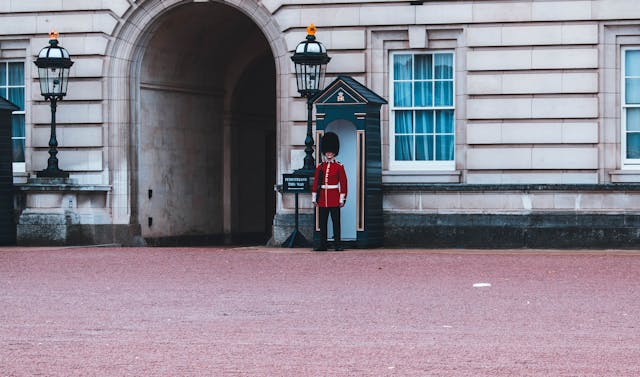
As the official London residence of the British monarch, Buckingham Palace stands as perhaps the most recognisable symbol of the British monarchy worldwide. While the palace functions as a working royal residence and administrative headquarters for much of the year, the State Rooms open to visitors during the summer months when the King is typically at Balmoral Castle in Scotland.
The palace tour showcases 19 magnificent State Rooms used for official functions, featuring treasures from the Royal Collection including paintings by Rembrandt, Rubens and Canaletto alongside exquisite furniture, sculpture and porcelain. The guided experience offers insights into both the ceremonial functions of monarchy and the building’s evolution from the Duke of Buckingham’s house to its current status.
Even outside the summer opening period, visitors gather year-round to witness the Changing of the Guard ceremony. This colourful military tradition takes place on scheduled days (typically Monday, Wednesday, Friday and Sunday) at 11:00, though arriving by 10:30 is recommended to secure a good viewing position.
For those interested in weekend things to do in London, combining a visit to Buckingham Palace with touring of the surrounding Royal Parks offers an excellent balance of cultural and recreational activities. St James’s Park immediately adjacent to the palace provides beautiful gardens, lake views and wildlife including the famous pelicans.
The Royal Mews and The Queen’s Gallery remain open to visitors throughout most of the year, offering alternative ways to experience royal heritage when the main palace tours aren’t operating. These lesser-known options often provide more relaxed visiting experiences with smaller crowds.
6. Westminster Abbey: Spiritual and Historical Heart
Few buildings encapsulate British history as comprehensively as Westminster Abbey. This magnificent Gothic church has hosted coronations since 1066, numerous royal weddings and contains the tombs of monarchs, poets, scientists and statesmen spanning centuries of British achievement.
As one of the best attractions in London, and a notable luxury wedding venue, the abbey’s architectural splendour immediately impresses visitors, with soaring vaulted ceilings reaching 31 metres and spectacular stained glass including the rose window in the north transept. However, it’s the extraordinary concentration of historical connections that makes Westminster truly exceptional among the myriad historic sites in London.
Guided tours help with the complex layering of history, from the 13th-century architectural core to more recent additions like the RAF Chapel commemorating the Battle of Britain. Audio guides narrated by Jeremy Irons provide excellent context for self-guided touring, explaining both the building’s features and the significant events it has witnessed.
Poets’ Corner contains memorials to literary figures from Chaucer to Dickens, while the Scientists’ Corner recognises figures including Isaac Newton and Charles Darwin. These areas connect visitors to intellectual and cultural achievements that shaped Britain and the world beyond.
For those seeking deeper engagement, the abbey offers excellent evening tours when daytime visitors have departed. These provide more intimate experiences of the space, along with access to areas sometimes restricted during regular opening hours. Special services throughout the year also offer opportunities to experience the building’s continuing spiritual function.
Abbey tickets include access to the Queen’s Diamond Jubilee Galleries, opened in 2018 in the medieval triforium. This space houses treasures from the abbey’s collection and offers rare views down into the main church from 16 metres above the floor.
7. Tate Modern: Contemporary Art in Industrial Grandeur
Housed in the former Bankside Power Station, Tate Modern has transformed a massive industrial building into one of the world’s most visited contemporary art museums since opening in 2000. Its turbine hall – a cavernous space measuring 35 metres high and 152 metres long – hosts specially commissioned large-scale installations that have become legendary in the art world.
Beyond the turbine hall, the permanent collection includes works by modern masters like Picasso, Matisse and Warhol alongside challenging contemporary pieces. The museum excels at presenting art in engaging contexts, helping visitors connect with works that might initially seem inaccessible.
The 2016 addition of the twisted pyramid-like Blavatnik Building expanded the museum’s capacity and added spectacular viewing terraces offering panoramic vistas across London. These free-to-access spaces provide some of the best views of St Paul’s Cathedral and the City of London financial district.
Tate Modern’s South Bank location places it amid a vibrant cultural area, connected to St Paul’s by the elegant Millennium Bridge. This positioning makes it easy to incorporate into itineraries focused on central London tourist attractions, particularly for those travelling on foot.
Like many British national museums, Tate Modern offers free admission to its permanent collection, with charges applying only to special exhibitions. This makes it one of the best free things to do in London for culturally inclined visitors, regardless of budget constraints.
The museum’s restaurants and cafes merit mention for their quality and views, particularly the sixth-floor restaurant offering panoramic Thames vistas. These spaces provide welcome respite during extended visits to this vast institution.
8. Churchill War Rooms: Underground Time Capsule
For history enthusiasts seeking more specialised experiences beyond the most famous sites, the Churchill War Rooms offer extraordinary immersion in Britain’s WWII experience. This underground complex beneath Whitehall served as the secret command centre from which Winston Churchill and his government directed the war effort during the Blitz and beyond.
What makes this site exceptional is its remarkable preservation – when personnel simply switched off the lights and walked away after VE Day in 1945, they left behind an authentic time capsule. Visitors today see the actual rooms where history-changing decisions were made, preserved exactly as they were during the conflict.
The complex combines the original Cabinet War Rooms with the Churchill Museum, an excellent biographical exhibition about Britain’s wartime leader. The museum contextualises Churchill’s complex character through documents, photographs and interactive displays, adding depth to the physical spaces of the bunker.
Audio guides lead visitors through the labyrinthine complex, explaining the function of each room and recounting dramatic moments from the war years. Particularly moving is the Map Room, left exactly as it was in 1945, still covered with pins and markings tracking Allied forces.
While this site doesn’t typically feature on lists of must see attractions in London, its historical significance and exceptional preservation make it worthy of consideration, particularly for those interested in 20th-century history. The intimate scale and focused narrative provide a counterpoint to London’s grander, more encyclopaedic museums.
As a site operated by Imperial War Museums rather than national museums, the War Rooms do charge admission fees. However, combination tickets with other attractions and inclusion in the London Pass can offer good value for those planning multiple site visits.
9. Kew Gardens: Botanical Magnificence
For visitors seeking respite from urban intensity, the Royal Botanic Gardens at Kew offer 132 hectares of horticultural splendour just 30 minutes from central London by Underground. This UNESCO World Heritage site combines scientific importance with spectacular landscapes, historic buildings and contemporary architecture.
The gardens house the world’s largest and most diverse botanical collection, with over 50,000 living plants. Particularly impressive are the Victorian glasshouses, including the recently restored Temperate House – the world’s largest surviving Victorian glass structure – and the Palm House with its tropical rainforest environment.
Beyond the plants themselves, Kew features numerous architectural highlights including the pagoda, the Ruined Arch and Queen Charlotte’s Cottage. The Hive, an award-winning contemporary installation, translates the activity of a beehive into an immersive multi-sensory experience through lights and sounds.
For families with children, Kew offers excellent dedicated facilities including the Children’s Garden and Badger Sett natural play area. These spaces encourage interaction with nature through thoughtfully designed play experiences suitable for various age groups.
While Kew requires slightly more travel time than central London tourist attractions, its excellent transport connections via the District Line and overground rail make it easily accessible. The gardens reward half-day or full-day visits, with multiple dining options ranging from casual cafes to the elegant Orangery restaurant.
As one of the lesser known London attractions compared to the most famous sites, Kew often provides more relaxed visitor experiences even during peak tourist season. The expansive grounds ensure that visitors can always find tranquil spaces away from crowds, offering a different pace from the city’s more concentrated attractions.
Planning Your Visit: Practical Tips
Making the Most of Your Time
For visitors with limited time, strategic planning becomes essential to experience London’s highlights without exhaustion. Thinking about London attractions in one day requires ruthless prioritisation and attention to geographical clustering. The most efficient approach typically combines one or two major sites with touring of a distinctive neighbourhood.
Many first-time visitors underestimate London’s size and the time required for travel between attractions. The city stretches over 1,572 square kilometres, and even sites that appear close on maps can require significant transit time. Planning itineraries around distinct areas – perhaps South Kensington museums one day, historic Westminster another – minimises travel and maximises experience.
For those seeking discount tickets for London attractions, several options merit attention. The London Pass offers entry to over 80 attractions with potential savings for intensive sightseers. Alternatively, the 2for1 deals available through National Rail offer excellent value when travelling by train. Individual attractions increasingly offer online discounts for advance booking, which simultaneously secures timed entry slots at popular sites.
Navigating Crowds and Queues
London receives over 30 million visitors annually, creating significant crowding at major attractions, particularly during summer months and school holidays. Understanding patterns helps mitigate this challenge – visiting popular sites at opening time or in the final hours before closing typically offers the best experiences.
For those wondering how to skip the line for London attractions, most major sites now offer timed entry tickets purchased online. These significantly reduce waiting, though they require committing to specific time slots in advance. Premium fast-track options at sites like the London Eye and Tower of London provide additional queue-bypassing benefits for those prioritising time efficiency over cost.
Researching opening hours for London attractions before visiting prevents disappointment and allows for strategic scheduling. Many museums offer late openings on specific weekdays – the British Museum stays open until 20:30 on Fridays, for instance – providing excellent opportunities to enjoy collections with smaller crowds.
Family-Friendly Options
Visitors travelling with children will find London exceptionally well-equipped with London attractions for families. Beyond obvious choices like the Natural History Museum and London Zoo, many major institutions offer dedicated children’s programmes, activity trails and hands-on exhibits designed specifically for younger visitors.
Be sure to prioritise attractions with free or discounted-price entry. You’ll no doubt be on a tight budget like many others nowadays, but thankfully finding free and cheap things to do in London is easier than ever thanks to the internet.
The Science Museum in South Kensington deserves special mention for its interactive galleries that engage children of all ages. The Wonderlab physics gallery allows children to experiment with scientific principles through play, while the Pattern Pod offers sensory experiences for under-8s.
When planning family visits, check the availability of facilities like baby-changing areas, child-friendly dining options and spaces where energetic youngsters can move freely. Most major London attractions have significantly improved such provisions in recent years, but smaller historic sites may have limitations dictated by their listed building status. And book ahead where possible – as anyone who has ever visited London attractions with kids will tell you!
Beyond the Obvious: Hidden Gems
While this guide focuses on nine outstanding attractions, the true richness of London comes from balancing famous sites with lesser known London attractions that reveal different aspects of the city’s character. Once you’ve experienced the essentials, you might visit:
- Sir John Soane’s Museum: A extraordinarily atmospheric house-museum created by the eccentric architect, filled with classical antiquities and architectural models
- The Wallace Collection: A magnificent collection of fine and decorative arts housed in a historic townhouse
- Wilton’s Music Hall: The world’s oldest surviving grand music hall, now restored and hosting contemporary performances
- Highgate Cemetery: A atmospheric Victorian necropolis where Karl Marx, George Eliot and Douglas Adams are buried among elaborate Gothic tombs
These alternative destinations often provide more intimate experiences and insights into London’s layered history beyond the most famous narratives.
Crafting Your Perfect London Experience
London’s extraordinary diversity means there is no single definitive list of attractions that suits all visitors. The nine highlighted in this guide represent exceptional experiences that balance historical significance, cultural importance and visitor experience, but your perfect travel itinerary should reflect your specific interests.
The best attractions in London ultimately depend on what resonates with your curiosity. A theatre enthusiast might prioritise Shakespeare’s Globe and the National Theatre over traditional sightseeing, while a dedicated foodie might structure days around Borough Market and distinctive culinary neighbourhoods.
Whatever your approach, allow time for serendipitous discovery alongside planned visits. Some of London’s most rewarding experiences come from unexpected encounters – a hidden garden glimpsed through a gate, a centuries-old pub discovered down a side street or a street performer creating momentary magic in a historic square.
By balancing highlights with discovery, famous landmarks with local experiences, you’ll develop your own relationship with London beyond the standard tourist narrative. The city has evolved continuously for two millennia, layering Roman foundations beneath medieval churches, Georgian squares and modernist towers. The most rewarding visits engage with this complexity rather than merely ticking off the most photographed sites.
The nine attractions highlighted here offer starting points for this deeper engagement – windows into different aspects of London’s character that invite further examination. Whether you have a weekend or several weeks to spend, these exceptional sites provide memorable experiences that capture the essence of this extraordinary global city.