
16 European Train Routes With Views For Picturesque Travel
Discovering Europe’s Most Breathtaking Railway Journeys
Have you ever found yourself scrolling through travel photos of stunning European landscapes, imagining what it would be like to witness those views in person? Perhaps you’ve spent hours planning holidays only to realise that navigating unfamiliar roads in foreign countries can be stressful rather than relaxing. The frustration of missing the scenery because you’re focused on driving or the exhaustion of long bus journeys can leave you wondering if there’s a better way to travel.
For many travellers, the dream of a European adventure involves immersing themselves in breathtaking scenery without the hassle of navigating unfamiliar roads or the constraints of flying over the very landscapes they wish to admire. The desire to truly experience Europe’s natural beauty – to witness snow-capped mountains, pristine lakes and charming villages at a leisurely pace – often seems at odds with the practicalities of modern travel.
What if there was a way to sit back, relax and let the stunning panoramas of Europe unfold before your eyes while enjoying comfort, space and the ability to move around freely? A travel method that combines the romance of traditional journeys with modern comforts and stunning views?
Thankfully, there are a wealth of European train routes with views to meet this exact requirement – the perfect solution for travellers seeking both convenience and unparalleled scenery. From the majestic Alps to the dramatic Norwegian fjords, Europe’s railway network offers some of the most picturesque journeys imaginable, transforming travel from a mere necessity into a highlight of your holiday.
Why Train Travel Offers the Best European Scenic Experience
The allure of rail travel lies in its unique ability to showcase landscapes from perspectives impossible to achieve by other means. Trains follow paths carved through mountains, alongside lakes and rivers and across vast plateaus, offering vantage points that roads simply cannot reach.
The most beautiful railway journeys in Europe offer panoramic windows specifically designed to maximise your viewing experience. You can freely move around, enjoy meals while watching the scenery change and even step outside at station stops to breathe in the fresh mountain air or capture the perfect photograph.
Train travel also connects you with the authentic rhythm of European life. You’ll pass through small villages and towns that aren’t on typical tourist itineraries, offering glimpses into local life that many visitors never experience. The gentle pace allows you to notice details that would be missed at higher speeds – a shepherd with his flock on a hillside, wildflowers carpeting an Alpine meadow or the changing colours of a forest as you climb in elevation.
Additionally, railway journeys significantly reduce your carbon footprint compared to car or air travel, allowing you to explore with a clearer conscience. Many of the routes we’ll discuss have been operating for over a century, representing remarkable feats of engineering that are attractions in themselves.
Now, let’s embark on our journey through some of the most stunning European train routes with views that showcase the continent’s most spectacular landscapes.
The Alpine Wonders
1. Glacier Express: The World’s Slowest Express Train
The scenic route of the Glacier Express in Switzerland is often described as one of the most spectacular railway journeys on the planet. Connecting the glamorous mountain resorts of Zermatt and St. Moritz, this 8-hour journey traverses 291 bridges and 91 tunnels across the Swiss Alps.
What makes this route so special is its panoramic carriages with windows that extend into the roof, providing unobstructed views of the passing landscapes. As you travel along this narrow-gauge railway, you’ll witness dramatic changes in scenery – from the shadow of the Matterhorn near Zermatt to the Rhine Gorge (known as Switzerland’s Grand Canyon) and over the breathtaking Landwasser Viaduct.
The journey includes crossing the Oberalp Pass at 2,033 metres above sea level, where in winter you’ll find yourself surrounded by pristine snow-covered mountains, and in summer by lush Alpine meadows dotted with wildflowers. The train’s unhurried pace (averaging just 39 km/h) is precisely what allows passengers to fully appreciate the stunning landscapes it traverses.
2. Bernina Express: Through the Clouds
The Bernina Express is a panoramic train in Switzerland that offers one of the most impressive mountain railway experiences in Europe. This UNESCO World Heritage route connects Chur in Switzerland with Tirano in Italy, crossing the Alps through landscapes that seem almost impossibly beautiful.
What distinguishes this journey is its remarkable engineering – the train climbs to over 2,253 metres at the Bernina Pass without the use of rack and pinion technology, making it the highest standard railway crossing in the Alps. Along the way, you’ll witness the turquoise waters of Lago Bianco, pass alongside glaciers and cross the stunning spiral viaduct at Brusio.
The contrast between the snow-covered peaks and the palm trees of the Italian border town of Tirano makes this journey a study in European diversity, all viewable from the comfort of your seat. The panoramic carriages ensure that every passenger enjoys magnificent views regardless of where they sit.
3. Golden Pass Panoramic Train in Switzerland
The Golden Pass panoramic train in Switzerland offers a unique perspective on the country’s varied landscapes, connecting Lucerne with Lake Geneva via Interlaken and the Bernese Oberland. This journey is actually composed of three different trains and can be completed in one day or broken up with overnight stays.
What makes this route special is how it showcases the transition between German-speaking and French-speaking Switzerland, along with the changing landscapes this entails. From the dramatic peaks around Interlaken to the gentle, vineyard-covered slopes that descend to Lake Geneva, the Golden Pass route offers a comprehensive Swiss experience.
The modern panoramic carriages feature windows that extend into the ceiling, ensuring unobstructed views of some of Switzerland’s most iconic scenery. Highlights include Lake Brienz with its turquoise waters, the resort town of Gstaad and the UNESCO-protected Lavaux vineyards near Montreux.
4. Gotthard Panorama Express in Switzerland
The Gotthard Panorama Express in Switzerland combines a lake steamer journey with a spectacular train ride through the historic Gotthard route. Beginning with a cruise on Lake Lucerne aboard a belle époque paddle steamer, passengers then board a panoramic train in Flüelen for the journey south to Lugano or Bellinzona.
This historic route passes through the original Gotthard tunnel, completed in 1882, which was a triumph of 19th-century engineering. The train spirals up the mountainside through loop tunnels, crossing dramatic bridges and offering views of charming Swiss villages nestled in valleys.
What makes this journey special is how it illustrates Switzerland’s geographic and cultural diversity – from the Germanic north to the Italian-influenced Ticino region in just a few hours. The route is also steeped in Swiss history, following paths that have been important trade routes since medieval times.
5. Arlberg Railway in Austria for Mountain Scenery
Choose the Arlberg Railway in Austria for mountain scenery as it is a remarkable feat of engineering that connects Innsbruck with Bludenz, crossing the Arlberg massif. Completed in 1884, this railway features numerous tunnels and viaducts that allow it to traverse some of Austria’s most challenging terrain.
The journey offers spectacular views of the Tyrolean Alps, with snow-capped peaks, lush valleys and traditional Austrian villages providing constant visual interest. The section between Langen am Arlberg and Bludenz is particularly dramatic, as the train descends more than 500 metres through a series of tunnels and viaducts.
What makes this route special is how it connects two distinct regions of Austria – Tyrol and Vorarlberg – with dramatically different landscapes and cultural influences. The railway is also historically significant, having opened up previously isolated Alpine communities to trade and tourism.
Northern European Spectacular Routes
6. Bergen Railway in Norway for Fjords Views
Opt for Bergen Railway in Norway for fjords views as it is Northern Europe’s highest mainline railway, connecting Oslo with Bergen across the mountainous spine of Norway. This remarkable 7-hour journey climbs to 1,222 metres above sea level at its highest point, crossing the Hardangervidda plateau – Europe’s largest high-mountain plateau.
What makes this route truly special is the diversity of landscapes it traverses – from the urban surroundings of Oslo, through dense forests that gradually give way to the treeless mountain plateau, before descending through spectacular fjord country to Bergen. In winter, the Hardangervidda section transforms into a snow-covered wilderness that seems otherworldly.
Key highlights include the section around Myrdal station, where the famous Flåm Railway branches off, and the dramatic descent towards Bergen with views of fjords and waterfalls. The Bergen Line is not just a transport route but a voyage through Norway’s natural wonders, offering a perspective on this stunning country that road travel simply cannot match.
7. Flam Railway in Norway for a Scenic Journey
Select the Flam Railway in Norway for a scenic journey, which is often ranked among the world’s most beautiful train journeys despite being only 20 kilometres long. Branching off from the Bergen Railway at Myrdal station, it descends 866 metres to the village of Flåm at the inner end of the Aurlandsfjord, a branch of the mighty Sognefjord.
What makes this short journey so remarkable is its steepness – with a gradient of 5.5% for much of its length, it’s one of the steepest standard-gauge railway lines in the world. The train passes through 20 tunnels, crosses one bridge and passes numerous viewpoints where it slows or stops to allow passengers to take photographs.
Highlights include the thundering Kjosfossen waterfall, where the train makes a special stop, and the constantly changing perspectives on the surrounding mountains and valleys. The journey ends in the picturesque village of Flåm, nestled between steep mountains at the head of the Aurlandsfjord.
8. Rauma Line in Norway for Mountain Views
Many people think that the Rauma Line in Norway for mountain views cannot be beaten. It connects Dombås on the Dovre Railway with Åndalsnes on the Romsdalsfjord. This 114-kilometre journey takes approximately 1 hour and 40 minutes, offering some of Norway’s most dramatic mountain and valley scenery throughout.
What makes this route special is how it follows the course of the Rauma River, famous for its emerald-green waters and excellent salmon fishing, through the spectacular Romsdalen valley. The line passes directly beneath the imposing Trollveggen (Troll Wall), Europe’s tallest vertical rock face at 1,100 metres high.
Architectural highlights include the elegant stone Kylling Bridge, perched 59 metres above the Rauma River with mountains towering on either side. The section near Verma, where the train spirals through a horseshoe curve to gain elevation, offers constantly changing perspectives on the dramatic landscape.
Central European Stunners
9. Black Forest Railway in Germany
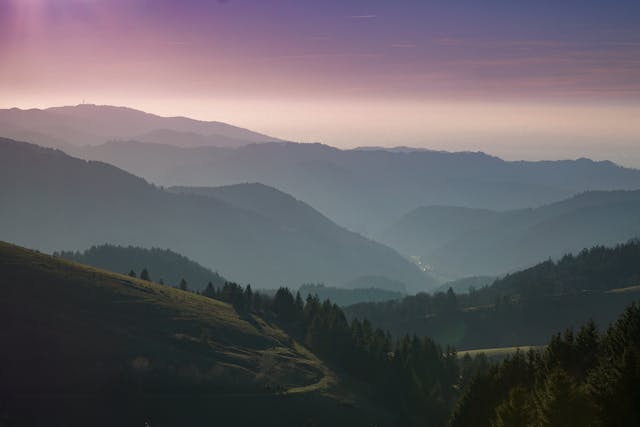
The scenic Black Forest Railway in Germany (Schwarzwaldbahn) is a masterpiece of 19th-century railway engineering that cuts through the heart of southwestern Germany’s famous forest region. Connecting Offenburg with Singen, this 150-kilometre route features 39 tunnels and numerous viaducts as it traverses challenging terrain.
What makes this journey special is the combination of technical achievement with natural beauty. The line climbs from the Rhine Valley to cross the Black Forest at an elevation of 850 metres, offering views of dense evergreen forests, charming timber-framed villages and rolling meadows along the way.
The most spectacular section lies between Hornberg and St. Georgen, where the line makes a series of horseshoe curves and passes through loop tunnels to gain elevation. This creates the unusual experience of seeing the same village from multiple angles as the train spirals upward. In autumn, when the deciduous trees add splashes of gold and red to the predominantly evergreen landscape, the views are particularly stunning.
10. Rhine Valley Line for Scenic Views
Travel on the Rhine Valley Line for scenic views as it follows one of Europe’s most historically significant waterways, offering passengers front-row seats to a landscape of terraced vineyards, medieval castles and charming riverside towns. The most scenic section runs between Bingen and Koblenz in Germany, through the UNESCO-listed Upper Middle Rhine Valley.
What makes this journey remarkable is the concentration of historic castles – approximately one every 2.5 kilometres – perched on rocky outcrops above the river. These fortifications, many dating from the 12th to 14th centuries, were built by local lords to collect tolls from passing merchant ships, creating what is now a breathtaking open-air museum of medieval architecture.
The train hugs the riverside, offering uninterrupted views of the winding Rhine and its steep valley sides covered with terraced vineyards. Highlights include the famous Lorelei Rock, the picturesque towns of Bacharach and St. Goar and the imposing fortress of Ehrenbreitstein across from Koblenz.
Hidden European Treasures
11. Centovalli Railway for the “Hundred Valleys” in Switzerland
The Centovalli Railway for the “hundred valleys” in Switzerland connects Locarno in Switzerland with Domodossola in Italy, traversing the wild and romantic Centovalli (hundred valleys) region. This 52-kilometre narrow-gauge railway takes around two hours to complete, crossing 83 bridges and passing through 31 tunnels along its route.
What makes this journey special is the dramatic landscape of deep ravines, waterfalls and chestnut forests, combined with the distinctly Mediterranean feel of the villages it passes through. The line provides a stark contrast to the high Alpine routes, showcasing Switzerland’s southern, Italian-influenced region of Ticino.
Highlights include the vertiginous viaducts spanning deep gorges, particularly impressive near the village of Intragna, and the constantly changing perspectives as the train winds its way through the complex topography. In autumn, when the chestnut forests turn golden, the journey is particularly spectacular.
12. Bohinj Railway Through Slovenia’s Alpine Region
Though less famous than some other European rail journeys, the Bohinj Railway offers some of the continent’s most spectacular mountain scenery. This route connects Nova Gorica on the Slovenia-Italy border with Jesenice, passing through the Julian Alps and alongside the stunning Lake Bohinj and Lake Bled.
Completed in 1906 during the Austro-Hungarian era, this line features remarkable engineering works including the 6,327-metre Bohinj Tunnel and the stunning Solkan Bridge over the Soča River – with its 85-metre arch, it’s the largest stone bridge in the world. The railway provides access to some of Slovenia’s most beautiful landscapes, particularly around the emerald-green Soča Valley.
The section near Lake Bled offers wonderful views of this iconic Slovenian lake with its island church and clifftop castle, making it a photographer’s dream. Throughout the journey, passengers are treated to vistas of limestone peaks, lush forests and traditional alpine villages.
13. Little Yellow Train in the French Pyrenees
Known locally as “Le Petit Train Jaune,” this charming metre-gauge railway traverses the French Pyrenees from Villefranche-de-Conflent to Latour-de-Carol, climbing from 427 metres to 1,593 metres above sea level along its 63-kilometre route. Its distinctive yellow carriages (painted to match the Catalan flag) have been carrying passengers through this mountainous region since 1910.
What makes this journey special is how the train overcomes the challenging terrain through a series of impressive engineering features, including the Séjourné Viaduct and the suspension bridge at Pont Gisclard – the only railway suspension bridge in France. The open-air carriages used in summer provide an even more immersive experience of the mountainous landscape.
Highlights include the fortified town of Mont-Louis (a UNESCO World Heritage site), the Têt Valley with its dramatic gorges and the sweeping views across to the higher Pyrenean peaks. This is a journey that combines natural beauty with fascinating insights into French and Catalan culture in this border region.
14. West Highland Line in Scotland
While not on the continent, no list of European scenic railway photography spots would be complete without Scotland’s West Highland Line. Running from Glasgow to Mallaig on the west coast, with a branch to Oban, this railway passes through some of Britain’s most spectacular wild landscapes.
The section north of Fort William is particularly renowned, crossing the Glenfinnan Viaduct (made famous in the Harry Potter films) with views of Loch Shiel stretching into the distance. The line continues through increasingly remote countryside, passing the beaches of Morar with their striking white sands before reaching the fishing port of Mallaig.
What makes this journey special is the sense of progression from the urban centre of Glasgow through increasingly wild and remote landscapes, culminating in views of the Small Isles and the Isle of Skye from the approach to Mallaig. The ever-changing Scottish weather adds drama to the journey, with mist, sunlight and rain transforming the appearance of the mountains and moors.
Eastern European Delights
15. Semmering Railway in Austria
The historic Semmering Railway, the first mountain railway in Europe to be designated a UNESCO World Heritage site, connects Vienna with Graz through the challenging terrain of the Semmering Pass. Built between 1848 and 1854, this remarkable piece of engineering includes 14 tunnels, 16 viaducts and over 100 curved stone bridges.
What makes this route exceptional is how it harmoniously integrates bold technical solutions with the magnificent mountain landscape. The train climbs over 455 metres in elevation along its 41-kilometre mountain section, offering spectacular views of the Eastern Alps, deep valleys and dense forests along the way.
Architectural highlights include the curved viaducts that blend seamlessly with the natural contours of the landscape – an early example of environmentally sensitive infrastructure design. The journey provides a fascinating glimpse into both Austria’s natural beauty and its pioneering role in railway engineering.
16. Transfăgărășan Railway in Romania
Romania’s Transfăgărășan Railway offers one of Eastern Europe’s most dramatic train journeys, crossing the Carpathian Mountains through a series of tunnels, viaducts and switchbacks. Though less well-known than Western European routes, this line delivers equally spectacular mountain scenery.
The narrow-gauge railway climbs to over 2,000 metres as it traverses the Făgăraș Mountains, offering views of dense forests, dramatic limestone cliffs and in spring, meadows covered with wildflowers. The journey includes passage through Romania’s longest railway tunnel at 1,290 metres, emerging to stunning alpine views.
What makes this route special is the sense of remoteness and wildness it conveys – this is a journey through one of Europe’s last great wilderness areas, where bears and wolves still roam. The traditional villages passed along the way offer glimpses into a way of life that has changed little over centuries.
European Train Routes With Views
Now that we’ve explored these 16 stunning best European train routes for landscapes, you might be wondering how to incorporate them into your travel plans. Many of these routes can be combined to create longer rail journeys across multiple countries, offering an ever-changing panorama of European landscapes.
For those with limited time, even a single day spent on one of these European train routes with views can provide unforgettable memories and photographs. You might base yourself in a hub city like Zurich, Oslo or Innsbruck, from which you can take day trips on several different scenic routes.
Many of these railways offer special panoramic carriages or seasonal services that enhance the experience further. The Switzerland scenic train that passes through the Alps, such as the Glacier Express, offers full-length panoramic windows that extend into the roof, ensuring unobstructed views of the passing mountains.
For photography enthusiasts, these journeys offer countless opportunities to capture stunning images. The changing light throughout the day creates different moods and highlights different aspects of the landscape, so taking the same route at different times might reveal entirely new perspectives.
The Joy of Slow Travel
Railways offer something increasingly precious – the opportunity to slow down and truly appreciate the beauty of our surroundings. Unlike air travel, which gets us to our destination quickly but with little sense of the journey, or car travel, which requires constant attention to driving, train travel allows us to be fully present in the experience.
As you watch the breathtaking landscapes of Europe unfold through panoramic windows, you’ll find yourself naturally disconnecting from digital distractions and reconnecting with the simple pleasure of observing the world pass by. The rhythmic sound of wheels on tracks has a meditative quality that enhances this experience of mindful travel.
These journeys also connect us with the history and culture of the regions they traverse. Many of these routes were engineering marvels of their time, representing human innovation and determination to overcome geographical barriers. The towns and villages glimpsed along the way offer windows into local life and traditions that have evolved in harmony with these distinctive landscapes.
Railways as the Ultimate Scenic Experience
Europe’s network of scenic railways offers one of the most rewarding ways to experience the continent’s diverse and spectacular landscapes. From the snow-capped peaks of the Alps to the dramatic fjords of Norway, from the dense forests of Germany to the Mediterranean-influenced valleys of southern Switzerland, these routes showcase the remarkable geographic diversity that makes Europe so fascinating.
The best European mountain train routes featured in this article are more than just means of transport – they are experiences in themselves, often ranking among travellers’ most cherished memories. The combination of engineering achievement, natural beauty and the relaxed pace of rail travel creates a uniquely satisfying way to explore.
As we become increasingly conscious of the environmental impact of our travel choices, these railways also offer a more sustainable alternative to air or car travel. Many operate on clean hydroelectric power, allowing us to enjoy Europe’s natural wonders while helping to preserve them for future generations.
Whether you’re planning a dedicated rail holiday across multiple countries or looking to add one or two scenic routes into a broader European itinerary, these European train routes with views promise experiences that will stay with you long after the journey ends. In a world where the destination often overshadows the journey, these railways remind us that sometimes the journey itself can be the greatest destination of all.