
Water Efficient Garden Design: 11 Ways To Reduce Water Waste
The UK’s changing climate patterns and rising water bills have many homeowners looking for solutions to maintain beautiful gardens while using less water. As rainfall becomes more unpredictable and summer droughts more frequent, creating a water efficient garden design has become essential for sustainable gardening. Reducing water consumption doesn’t mean sacrificing the beauty and productivity of your outdoor space. A thoughtfully designed water-saving garden can be more resilient, require less maintenance and provide a sanctuary for wildlife.
Whether you have a sprawling country garden or a modest urban plot, implementing water-saving strategies can make a significant difference to both your water bills and your environmental footprint. With the average UK garden hose using about 1,000 litres of water per hour – roughly the same amount a person would normally use in a week – finding ways to reduce garden watering is becoming increasingly necessary.
The following approaches combine practical wisdom with modern innovations to help you cultivate a sustainable oasis that works with nature, not against it.
Understanding Your Garden’s Water Needs
Getting to know how water moves through your garden ecosystem is fundamental to creating an efficient watering strategy. Different areas of your garden will naturally retain more moisture than others, depending on factors like exposure to sun and wind, soil type and proximity to structures.
Observing your garden through different weather conditions provides valuable insights. Notice which areas dry out first after rain and which stay damp longer. This knowledge helps make smarter decisions about plant placement and irrigation needs, forming the foundation of an effective water efficient garden design.
Sandy soils drain quickly but don’t hold nutrients well, while clay soils retain water but can become compacted and waterlogged. Adding organic matter to either type improves its water-holding capacity while maintaining good drainage – a win-win for plant health and water conservation.
1. Implement Drought Resistant Garden Plants for Lasting Beauty
One of the most effective ways to reduce water consumption is to choose plants that naturally require less water. Drought resistant garden plants have evolved mechanisms to thrive with minimal rainfall, making them perfect candidates for a water-wise garden.
Mediterranean plants like lavender, rosemary and sage are excellent choices for sunny spots, with their silver foliage and aromatic oils helping them cope with hot, dry conditions. Native wildflowers such as corn cockle, field scabious and bird’s foot trefoil have adapted to the UK climate over thousands of years and can thrive without additional watering once established.
According to the Royal Horticultural Society (RHS), drought-tolerant plants typically share certain characteristics: deep root systems, small or narrow leaves, grey-green or silver foliage or succulent water-storing tissues. By incorporating these plants into your garden design, you’ll naturally reduce the need for supplementary watering.
For year-round structure, consider drought-tolerant shrubs like cistus, hebe and the California lilac (Ceanothus), which provide flowers for pollinators while requiring minimal irrigation. Ornamental grasses also add movement and texture while being remarkably resilient during dry periods.
2. Install a Water Saving Irrigation System for Efficient Delivery
When watering is necessary, how you deliver that water makes a tremendous difference to efficiency. Traditional overhead sprinklers can lose up to 50% of water to evaporation and runoff, especially on windy days. In contrast, a water saving irrigation system delivers water directly to plant roots where it’s needed most.
Drip irrigation and soaker hoses are particularly efficient, using up to 70% less water than conventional sprinklers. These systems deliver water slowly at soil level, minimising evaporation and encouraging deeper root growth. Modern systems can be connected to smart controllers that adjust watering schedules based on weather conditions and soil moisture levels.
The Thames Water company recommends: “Water deeply but infrequently to encourage plants to develop deeper root systems that can access moisture further down in the soil profile.” This approach not only saves water but also produces more resilient plants that can better withstand dry periods.
When setting up your irrigation system, zone your garden according to water needs. Group thirsty plants together and drought-tolerant species in another area. This prevents overwatering plants that don’t need it while ensuring those that do receive adequate moisture.
3. Explore a Guide to Xeriscaping for Beginners Approach
Originating in drought-prone regions of the United States, xeriscaping has gained popularity worldwide as a comprehensive approach to water-wise gardening. A guide to xeriscaping for beginners would explain that this practice encompasses a complete design philosophy for water conservation.
The principles of xeriscaping include:
- Planning and design with water conservation in mind
- Limiting turf areas to where they’re functionally needed
- Selecting appropriate plant material for your climate
- Improving soil with organic matter to increase water retention
- Using mulch to reduce evaporation
- Efficient irrigation when necessary
- Regular maintenance to keep the garden functioning optimally
The UK Gardening Association notes that while the term “xeriscaping” might sound exotic, many traditional British garden practices already incorporate these principles. Cottage gardens, with their mixed plantings and emphasis on hardy perennials, share much in common with xeriscaped designs.
Adapting xeriscaping principles to the British climate means acknowledging our typically rainy winters and potentially dry summers. Focus on creating gardens that can capture winter rainfall and store it in the soil through organic matter, then survive summer dry spells with minimal intervention.
How to Reduce Garden Watering Without Sacrificing Plant Health
Learning how to reduce garden watering while maintaining a thriving garden requires a combination of smart plant choices, soil improvements and maintenance practices. The goal is to create conditions where plants can access natural moisture more effectively, reducing the need for supplementary watering.
4. Create a DIY Rainwater Harvesting System to Capture Free Water
One of the most sustainable approaches to garden watering is to capture and store rainfall when it’s plentiful for use during dry periods. A DIY rainwater harvesting system can be as simple as a water butt connected to a downpipe, or as complex as an underground storage tank connected to a pump system.
The average UK roof collects about 85,000 litres of rainwater annually – enough to fill 450 water butts. Even a modest semi-detached house with a small garden could easily collect enough rainwater to significantly reduce mains water usage for garden purposes.
When setting up a rainwater collection system, position water butts on a stable, level base and consider linking multiple containers together to increase your storage capacity. Raised butts provide better water pressure, and adding a tap near the bottom makes it easier to fill watering cans or connect a hose.
“Rainwater is actually better for plants than tap water,” explains Water UK, “as it’s naturally soft and contains no chemicals.” This makes it particularly beneficial for acid-loving plants like rhododendrons, azaleas and blueberries, which can suffer from the lime present in hard tap water.
For larger gardens, consider more substantial rainwater harvesting solutions such as slim-line tanks that can be positioned against walls or underground cisterns that connect to irrigation systems. These larger installations can dramatically reduce or even eliminate the need for mains water in the garden.
5. Select the Best Drought Tolerant Perennials for Reliable Performance
When planning a water-efficient garden, investing in best drought tolerant perennials gives you beautiful, reliable plants that return year after year without demanding excessive resources. These plants typically develop extensive root systems that can access moisture deep in the soil profile.
Some exceptional drought-tolerant perennials for UK gardens include:
- Echinacea (Coneflower) – with daisy-like flowers that attract pollinators
- Achillea (Yarrow) – featuring flat-topped flower clusters in various colours
- Nepeta (Catmint) – offering lavender-blue flowers that cats adore
- Sedum – with succulent leaves and autumn flower heads that persist into winter
- Verbena bonariensis – providing airy purple flowers on tall stems
- Eryngium (Sea Holly) – sporting architectural blue-tinged flowers and stems
The key to success with drought-tolerant perennials is proper establishment. During their first growing season, even drought-resistant plants need regular watering to develop the extensive root systems that will later make them self-sufficient. Patience during this establishment phase pays dividends in future water savings.
Garden designer James Hitchmough from Sheffield University notes: “It’s worth remembering that many drought-tolerant perennials actually dislike wet winter soils, so good drainage is essential.” Adding grit to heavy soils can help prevent winter waterlogging while still allowing these plants to thrive during summer dry spells.
6. Implement Low Water Landscaping Ideas Beyond Plants
Creating a water-efficient garden involves thoughtful hardscaping and garden structure alongside plant selection. Low water landscaping ideas include thoughtful use of permeable paving, strategically placed shade structures and contoured land that directs water flow.
Consider replacing water-hungry lawns with permeable paving or gravel in areas where you need firm surfaces for seating, dining or paths. Unlike concrete, these permeable materials allow rainwater to percolate into the soil rather than running off into drains. Choose light-coloured materials that reflect rather than absorb heat, reducing evaporation from surrounding soil.
Strategic placement of trees and structures can create microclimate zones that protect more vulnerable plants from drying winds and intense afternoon sun. A pergola with deciduous climbers, for example, provides cooling shade in summer while allowing warming sunlight through in winter.
The Royal Horticultural Society recommends: “Consider the topography of your garden and work with it rather than against it. Low-lying areas naturally collect water and are ideal for plants with higher moisture needs, while raised areas drain quickly and suit drought-tolerant species.”
Water features, perhaps counter-intuitively, can actually contribute to water efficiency when properly designed. Recirculating water features with minimal surface area and maximum visual impact provide the sensory benefits of water while minimising evaporation losses.
Water Efficient Garden Design: Creating Harmony with Nature
The principle of designing a water-efficient garden extends beyond individual water-saving techniques to encompass a holistic approach where each element works in harmony with natural processes. This design philosophy acknowledges that gardens are ecosystems, not just collections of plants.
7. Create a Drought Resistant Vegetable Garden for Sustainable Harvests
Growing your own food is a wonderful way to reduce your environmental footprint, but traditional vegetable gardens can be surprisingly water-intensive. Creating a drought resistant vegetable garden requires thoughtful planning and selection of appropriate varieties.
Some naturally drought-tolerant vegetables include:
- Tomatoes – especially plum and cherry varieties
- Beans – particularly runner beans and borlotti
- Courgettes and summer squash – which shade their own root zone
- Root vegetables like beetroot and carrots
- Herbs such as rosemary, thyme and sage
The key to water efficiency in the vegetable patch lies in how you grow these crops. The “three sisters” method – an ancient technique of companion planting corn, beans and squash together – creates a naturally water-efficient growing system. The corn provides support for the beans, which fix nitrogen for the corn, while the squash leaves shade the soil, preventing evaporation.
Charles Dowding, a leading UK expert on no-dig gardening, explains: “Building soil organic matter is perhaps the single most important factor in creating a drought-resistant vegetable garden. Every 1% increase in organic matter helps soil hold approximately 20,000 more litres of water per hectare.”
Mulching vegetable beds with compost, straw or grass clippings helps retain moisture while suppressing weeds that would otherwise compete for water. For crops that do need regular watering, consider installing a drip irrigation system with a timer to deliver precise amounts of water directly to plant roots.
8. Learn How to Install Drip Irrigation for Maximum Efficiency
When supplemental watering is necessary, drip irrigation stands out as the most efficient delivery method, using up to 70% less water than conventional sprinklers. Learning how to install drip irrigation is a valuable skill for any water-conscious gardener.
A basic drip system consists of a main supply line connected to a water source (either mains water or a rain barrel), with smaller distribution tubes that deliver water directly to individual plants. Drippers or emitters control the flow rate, typically delivering water in slow drips rather than sprays.
Installing a system requires some initial planning:
- Map your garden, noting different watering zones based on plant needs
- Calculate the length of tubing required and the number of emitters needed
- Consider water pressure – gravity-fed systems from rain barrels will need different components than mains-pressure systems
- Include a filter to prevent clogging and a pressure regulator if using mains water
- Plan for easy winterisation in frosty areas
The Energy Saving Trust recommends: “Combine drip irrigation with timers and moisture sensors to ensure water is only delivered when and where it’s needed. Modern smart irrigation controllers can even adjust watering schedules based on weather forecasts.”
For those not ready to install a permanent system, soaker hoses offer a simpler alternative that still delivers water efficiently at soil level. These porous hoses seep water along their entire length and can be moved as needed around the garden.
9. Promote Water Conservation with Native Plants
The plants that have evolved in our local ecosystems are naturally adapted to thrive in the UK’s typical rainfall patterns. Promoting water conservation with native plants not only reduces the need for supplementary watering but also creates valuable habitat for local wildlife.
UK native plants like foxgloves, primroses, teasels and wild marjoram have developed strategies to cope with our climate’s seasonal variations. They typically develop deeper root systems that can access soil moisture even during dry periods and go dormant rather than die when conditions are unfavourable.
Nigel Dunnett, Professor of Planting Design at Sheffield University, explains: “Native plant communities have evolved complex relationships with local soil microorganisms that help them access water and nutrients more efficiently. When we recreate these communities in our gardens, we tap into these natural efficiencies.”
Creating a mini-meadow area in your garden can be particularly water-efficient. Unlike conventional lawns that need regular watering to stay green, meadow plants with their deeper roots can access moisture further down in the soil profile. Even a small area sown with native wildflower mix can become a beautiful, low-maintenance feature that needs no irrigation once established.
When selecting native plants, consider your specific local conditions. Plants native to chalky southern soils will differ from those adapted to acidic northern conditions. Local botanic gardens and wildlife trusts can be excellent sources of information about which native species will thrive in your particular area.
10. Build a DIY Rainwater Collection System for Long-Term Sustainability
Expanding beyond simple water butts, a comprehensive DIY rainwater collection system can dramatically reduce or even eliminate your garden’s reliance on mains water. Such systems range from interconnected water butts to more sophisticated setups with filters, pumps and underground storage.
When designing a more advanced system, consider:
- First-flush diverters that prevent the initial roof runoff (which contains more contaminants) from entering your storage
- Filters to remove debris and improve water quality
- Overflow mechanisms that direct excess water to useful places in the garden rather than to drains
- Pumps for larger gardens, which can connect rainwater to irrigation systems
- Underground tanks, which keep water cooler and prevent algae growth
The UK Rainwater Harvesting Association notes that properly stored rainwater can be used for more than just irrigation: “With appropriate filtration, harvested rainwater can supply water features, garden ponds and even indoor uses like toilet flushing, significantly reducing overall household water consumption.”
For properties with limited space, slim-line water tanks can be positioned against walls, while decorative rain chains can replace conventional downpipes, turning rainfall into an attractive feature while directing it to collection points.
A single 200-litre water butt filled just five times during the year provides 1,000 litres of free, plant-friendly water for your garden.
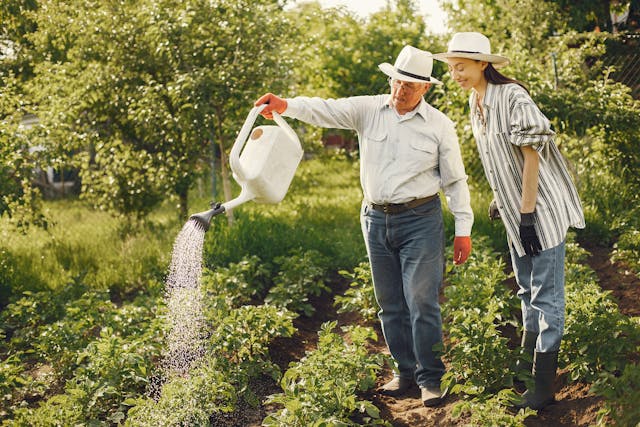
Best Time to Water the Garden for Maximum Efficiency
Understanding the best time to water the garden can significantly reduce waste through evaporation. Timing is everything when it comes to efficient irrigation, with early morning generally considered optimal for most garden situations.
11. Utilise Mulching to Conserve Water in All Garden Areas
Perhaps the simplest yet most effective water-saving technique available to gardeners is mulching to conserve water. A good organic mulch acts as a protective blanket over the soil, preventing evaporation, suppressing thirsty weeds and gradually improving soil structure as it breaks down.
Effective mulching materials include:
- Garden compost or well-rotted manure – which also adds nutrients
- Bark chips or shredded wood – long-lasting and ideal around trees and shrubs
- Straw – particularly good for vegetable gardens
- Gravel or stone – for Mediterranean-style plantings
- Cocoa shell – which has a pleasant scent (but is toxic to dogs)
- Grass clippings (dried first) – free and abundant in most gardens
Apply mulch in spring when soil is moist and warm, creating a layer approximately 5-7cm deep. Leave a small gap around plant stems to prevent rot, and replenish organic mulches annually as they break down.
The Garden Organic charity recommends: “Before applying mulch, water the soil thoroughly if it’s dry. There’s no point sealing in dryness – mulch works by retaining existing moisture, not creating it.”
In vegetable gardens, consider using black plastic mulch for warm-season crops like tomatoes and courgettes. This not only conserves moisture but also increases soil temperature, promoting faster growth. For a more sustainable option, biodegradable mulch films made from plant-based materials offer similar benefits without the plastic waste.
Implement Water Saving Garden Techniques in Your Maintenance Routine
Beyond design and plant selection, day-to-day maintenance practices can significantly impact water use. Incorporating water saving garden techniques into your regular garden routine helps maximise the efficiency of every drop.
Proper pruning, for instance, can reduce water needs by removing excess foliage that would otherwise transpire moisture. For shrubs and perennials, deadheading spent flowers not only improves appearance but also prevents plants from expending energy on seed production, reducing their water requirements.
Weeding regularly is crucial, as weeds compete with garden plants for available moisture. One study from the University of Reading found that weeds can reduce soil moisture by up to 25% compared to weed-free areas.
When adding new plants to the garden, consider water-efficient planting techniques. Creating a slight depression around plants helps collect rainfall and irrigation water, directing it to roots rather than running off. For slope plantings, form soil into small berms on the downhill side of plants to catch and hold water.
The Royal Horticultural Society advises: “Group containers together to create a microclimate with higher humidity, reducing evaporation. Place saucers under pots during summer months to catch excess water, but remove them during winter to prevent waterlogging.”
Explore Soaker Hose Installation Tips for Simplified Irrigation
For gardeners seeking a middle ground between hand watering and full drip irrigation systems, soaker hoses offer an excellent compromise. Understanding soaker hose installation tips helps maximise their efficiency and longevity.
Soaker hoses are porous along their length, allowing water to seep directly into the soil. They’re particularly effective when:
- Laid in concentric circles around trees and shrubs
- Snaked through densely planted borders
- Run in straight lines alongside vegetable rows
- Buried under mulch to further reduce evaporation
To get the most from soaker hoses:
- Connect them to a timer to ensure consistent watering without waste
- Keep hose lengths under 30 metres to maintain even water distribution
- Use a pressure reducer to prevent the hose from bursting
- Position the hose with holes facing downward
- Flush the system occasionally to prevent clogging
“Soaker hoses work best on level ground,” explains Waterwise UK. “On slopes, water will flow to the lowest point rather than seeping out evenly. If irrigating a slope, run hoses across the slope rather than up and down, and use shorter sections with multiple feed points.”
When not in use during rainy periods or winter, store soaker hoses out of direct sunlight to prevent UV damage and extend their useful life. Most quality soaker hoses last 3-5 years with proper care.
Consider a Greywater System for Garden Use
For those committed to maximum water efficiency, implementing a greywater system for garden irrigation offers significant potential for water savings. Greywater – the relatively clean waste water from baths, showers, washing machines and bathroom sinks – can be safely used to irrigate ornamental plants.
Simple greywater systems include:
- Diverting washing machine rinse water directly to garden areas
- Using a greywater diverter on shower waste pipes
- Collecting bath water in buckets for manual distribution
More sophisticated systems might include:
- Surge tanks to temporarily hold water
- Simple filtration to remove hair and particles
- Distribution systems like drip irrigation
The Centre for Alternative Technology in Wales advises: “When using greywater, it’s important to use plant-friendly cleaning products free from boron, sodium and bleach. Look for products labelled as environmentally friendly and biodegradable.”
While greywater is generally safe for ornamental plants and established trees, avoid using it on edible crops where the water might contact the part you eat. Root vegetables and fruit trees are generally fine, but leafy greens and low-growing fruits are better irrigated with rainwater or tap water.
Learn How to Make a Swale for Passive Water Harvesting
For larger gardens, learning how to make a swale – a shallow channel that follows the contour of the land – provides a way to slow, spread and sink rainwater naturally. Swales are particularly effective on sloped properties where rainwater might otherwise run off before it can benefit the garden.
Unlike drainage ditches that are designed to remove water quickly, swales are level along their length and designed to hold water temporarily, allowing it to infiltrate slowly into the soil. The excavated soil is typically used to create a berm on the downhill side, which can be planted with drought-tolerant species.
Creating a basic swale involves:
- Identifying contour lines across your property (using a water level or laser level)
- Digging a shallow channel (typically 15-30cm deep) along the contour
- Building a berm on the downhill side with the excavated soil
- Stabilising the berm with appropriate plantings
- Adding organic matter to the channel bottom to improve infiltration
The Permaculture Association UK notes: “Swales work best when they’re part of a whole-system approach to water management. Consider them the backbone of your garden’s water harvesting system, complemented by rainwater storage, appropriate plantings and good soil management.”
In urban gardens with limited space, even small swale-like depressions can make a difference by catching rainfall from hard surfaces and allowing it to infiltrate rather than running into storm drains.
Select Water Efficient Garden Plants for Your Specific Conditions
While we’ve discussed drought-resistant plants, it’s worth emphasising that truly water efficient garden plants are those perfectly matched to your specific site conditions. A plant that thrives without irrigation in one garden might struggle in another due to differences in soil, exposure, rainfall patterns and microclimate.
Research by the Royal Botanic Gardens Kew has identified several UK-native plant communities that naturally thrive in dry conditions, including:
- Chalk grassland species like salad burnet and small scabious
- Dry heathland plants including heathers and gorse
- Coastal cliff-top species like thrift and sea campion
These plant communities offer inspiration for garden designs that can thrive with minimal irrigation even during dry summers. By observing which plants grow naturally in dry areas near your home, you can gain valuable insights into what might succeed in your garden.
Beth Chatto’s famous Gravel Garden in Essex – never artificially watered since its creation in 1992 – demonstrates how careful plant selection based on local conditions can create a beautiful, resilient garden even in one of the UK’s driest regions.
When selecting plants, look beyond labels like “drought-tolerant” to understand a plant’s native habitat and growing conditions. Plants from Mediterranean regions, South African fynbos, the North American prairies and Australian outback have all evolved strategies to cope with periodic drought and can thrive in UK gardens with similar conditions.
Creating a Water-Wise Garden for the Future
As our climate continues to change and water becomes an increasingly precious resource, implementing water efficient garden design is environmentally responsible and it’s also a practical necessity for maintaining beautiful gardens with reasonable effort and expense.
The approaches outlined in this guide work best when combined thoughtfully. A water-efficient garden might incorporate drought-resistant plants growing in improved soil, watered occasionally by a drip system fed from rainwater harvesting, with all soil surfaces protected by appropriate mulch. Each element supports the others, creating a resilient system that requires minimal input once established.
Creating a water-efficient garden is best approached step by step. Start with the strategies that seem most manageable for your situation and build from there. Even small changes at home, like adding a water butt or mulching your borders, can make a meaningful difference to your garden’s water needs.
By working with nature rather than against it, you can create a garden that not only survives but thrives with minimal water input – a garden that’s better for your wallet, better for the environment and ultimately more rewarding to maintain.