
How To Protect Hair While Sleeping: Overnight Care Routine 2025
Did you know that learning how to protect hair while sleeping could be the missing piece in your beauty routine? Surprisingly, those hours of tossing and turning can cause significant damage to your locks through friction, tangling and moisture loss. This is especially true for those wondering how to sleep with curly hair without ruining it.
Cotton pillowcases with their rough texture are a common culprit behind the breakage of your tresses while sleeping with wet hair makes your strands even more vulnerable to damage. Furthermore, tight hairstyles create tension that weakens your locks over time. The good news? Simple changes to your nighttime routine can make all the difference. Protective hairstyles for sleep like loose braids or gentle buns can minimise damage, while how to protect your hair at night often comes down to using the right accessories.
Your tresses are at their weakest when wet, so ensuring they are completely dry before bed is essential. A silk pillowcase can actually reduce friction by up to 43% compared to cotton, preventing the frizz and breakage you might notice each morning. Additionally, using a wide-tooth comb to detangle before bed helps distribute natural oils throughout your strands.
We’ll walk you through a complete overnight hair care routine that will transform how your tresses look and feel each morning. From choosing the best pillowcase to mastering protective styles, these evidence-based tips will help you wake up with healthier, more manageable hair, especially if you’re looking for ways how to keep curls overnight.
How to Protect Hair While Sleeping
Your hair experiences more than just rest during those precious hours of sleep. Nighttime should be a recovery period for your tresses, yet without proper care, you might be causing more harm than good.
Why sleep causes hair damage
The primary culprit behind nighttime hair damage isn’t simply the act of sleeping – it’s the friction created as you move. Throughout the night, your body makes involuntary movements that cause your locks to rub against your pillow and bedding. This constant friction weakens hair strands and leads to breakage, particularly for those with fine or thin hair.
Your hair’s vulnerability increases significantly when wet. Moisture breaks down the hydrogen bonds that provide structural integrity to your hair shaft, making it considerably weaker and more elastic. In this state, even gentle manipulation through tossing and turning can cause strands to stretch and snap.
Overnight damage isn’t immediately visible but accumulates gradually. The repeated stress from nightly friction contributes to split ends, frizz and potential long-term thinning if not addressed properly. This is why curly hair sleep protection is crucial for maintaining healthy locks. Friction reduction is one of the key secrets to sleeping with curly hair and how to protect curls at night.
Common mistakes before bed
Several common bedtime habits unknowingly sabotage your hair health:
Sleeping with wet hair: Many stylists consider this among the worst hair care mistakes. Your hair is at its weakest when wet, making it dramatically more susceptible to breakage during sleep movements. Moreover, damp tresses create an environment where bacteria and fungus can thrive, potentially leading to scalp issues including dandruff.
Using tight hairstyles: Though it might seem convenient, sleeping with your locks in a tight ponytail or bun creates harmful tension on your scalp. This constant pulling can lead to traction alopecia over time and causes immediate breakage around the hair tie.
Skipping pre-sleep brushing: Not detangling before bed allows knots to transform into worse tangles overnight. Proper brushing distributes natural oils from your scalp to your ends and prevents morning matting.
Using cotton pillowcases: These absorb moisture from your tresses, leading to dryness and increased friction. Cotton’s rough texture further contributes to frizz and breakage as you move during sleep. This is why many people switch to a silk pillowcase for its silk pillowcase benefits.
How should you sleep with your hair?
The best way to sleep with hair depends largely on its length and type. For short locks, wearing it down usually works best as tying it could create too much tension. However, longer tresses benefit from some form of loose containment to prevent tangling. For those with curls, learning how to sleep on curly hair is essential for maintaining definition and reducing frizz. The best way to sleep with curly hair is quite different to how you might sleep with straight locks, so follow these tips to understand what to do with curly hair at night and also straight tresses.
Never sleep with your hair in a tight ponytail. Instead, choose protective hairstyles for sleep that minimise tension whilst still keeping strands contained:
For straight or wavy tresses: A loose, low bun secured with a soft scrunchie (never an elastic band) provides protection without stress.
For curly locks: The “pineapple” method – a very loose, high ponytail that preserves curl pattern – works brilliantly. This pineapple hair sleep technique is popular among those looking to maintain curls overnight.
For all hair types: Loose braids offer excellent protection whilst reducing friction and preventing tangling. They should be comfortable enough that you don’t feel pulling at your scalp.
Position matters too. Avoid sleeping with your hair directly under your head or sleeping on your stomach, as these positions increase friction. Instead, position long hair above your head on the pillow when sleeping on your back.
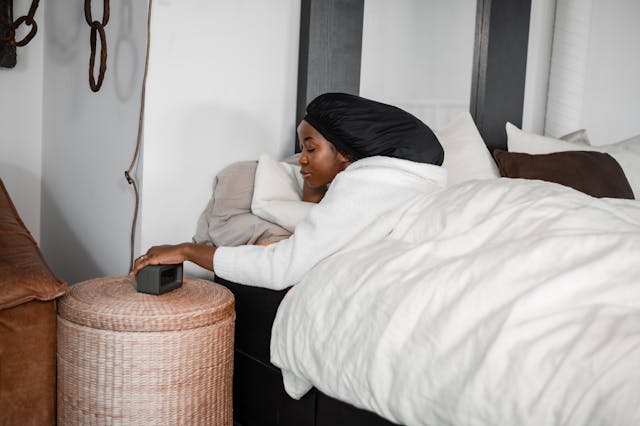
You could try a satin sleep turban for nighttime hair protection. This is particularly useful for waves and curls as the curl pattern isn’t disrupted by the fabric of the turban.
Ultimately, how to keep curly hair overnight combines proper styling with the right sleep protection accessories – setting the foundation for the specific techniques we’ll explore in the following sections.
Step 1: Prepare Your Hair Before Bed
Preparing your tresses properly before bed creates the foundation for overnight protection. Much like your skincare routine, these essential steps prevent unnecessary damage and help maintain your hair’s health whilst you sleep, especially important for those following a curly hair routine.
Detangle gently with a wide-tooth comb
Brushing your locks before bedtime is more than just a beauty ritual – it’s crucial for how to protect hair while sleeping. One of the simplest yet most effective ways to prepare your tresses is thorough detangling with a wide-tooth comb. This helps distribute natural oils from your roots to ends and prevents knots from becoming worse overnight.
Start detangling from the ends and gradually work your way up to avoid unnecessary pulling. A wide-tooth comb is gentler on your locks than standard brushes, especially for those with curly textures. Nevertheless, be cautious about timing – it’s best to avoid detangling soaking wet hair as there’s a higher risk of breakage when your strands are most vulnerable.
For curly hair types, consider using your fingers instead of a comb for minimal disruption to your curl pattern. After moisturising with a suitable product, gently work through any knots starting at the ends. This method is particularly helpful for those wondering how to keep curls in hair overnight.
Dry your hair completely
Going to bed with wet hair is amongst the worst things you can do for hair health. Wet hair is significantly weakened, as each strand can stretch up to 30% of its original length before returning to normal – making it particularly susceptible to breakage during sleep.
Beyond mechanical damage, sleeping with wet hair creates an environment where fungus and bacteria can thrive, potentially leading to scalp issues. For chemically treated hair, the risks are even greater as these strands are naturally more fragile and prone to breakage.
If evening showers are non-negotiable, try to add as much time as possible between washing and sleeping. At the very minimum, use a towel to remove excess moisture and allow your tresses to air-dry, or use a hairdryer on a low setting until your locks are at least 70% dry. This is especially important for curly hair overnight care.
Apply a leave-in conditioner or serum
A leave-in conditioner or serum works wonders for nighttime hair care for growth and protection. These products act as a protective barrier, adding moisture whilst minimising friction as you sleep. They’re particularly beneficial for addressing curly hair dryness and promoting hair hydration.
When choosing products, look for those containing nourishing ingredients like coconut oil, argan oil or natural proteins that strengthen tresses without weighing it down. Apply leave-in conditioners to damp (not wet) hair, focusing primarily on mid-lengths to ends rather than the scalp.
For those struggling with frizz, a lightweight hair serum applied before bed helps control flyaways caused by friction against your pillowcase. Products containing castor seed oil support the keratin in your locks, making each strand stronger and smoother overnight.
Use a soft scrunchie if tying hair
If you prefer sleeping with your locks secured, the type of hair tie you choose matters tremendously. Traditional elastic bands cause stress on your strands and lead to breakage, yet many people use them habitually.
Silk or satin scrunchies offer superior protection because their smooth surface minimises friction against hair strands. Unlike regular hair ties that tug and pull as you move in your sleep, silk scrunchies reduce tension and friction, keeping your hair strong and intact.
For maximum benefit, secure your hair loosely – tight styles create tension that weakens hair over time. A loosely tied scrunchie should hold your hair comfortably without creating the telltale ‘kink’ that elastic bands leave behind.
Beyond material, size matters too. Opt for oversized scrunchies for sleeping arrangements as they distribute tension more evenly across your hair, reducing the risk of breakage at stress points. This is particularly important when considering how to wrap curly hair at night.
Step 2: Choose the Right Sleep Accessories
Selecting proper sleep accessories serves as the cornerstone of any effective overnight hair protection strategy. The right tools can make a substantial difference in preventing damage and maintaining your hairstyle through the night, especially when it comes to curly hair sleep.
Silk pillowcase for hair protection
A silk pillowcase for hair offers remarkable benefits that cotton alternatives simply cannot match. The smooth surface creates significantly less friction against your hair strands, which in turn reduces breakage, frizz and tangling. Studies show that silk creates up to 43% less friction than cotton, allowing your hair to glide across the surface without snagging.
Silk’s natural properties also help maintain your hair’s moisture balance. Unlike cotton, which absorbs natural oils and any applied products from your hair, silk’s non-absorbent nature allows your strands to retain essential moisture. This preservation of natural oils leads to better-conditioned hair that appears healthier and more manageable upon waking. It’s also a hypoallergenic pillowcase, ticking the anti-allergy box too.
Besides preventing frizz, a silk pillowcase helps preserve your hairstyle overnight. The reduced friction means less disruption to your curls, waves or straightened styles as you toss and turn. This benefit proves particularly valuable if you invest time styling your hair, as it extends the life of your blowouts and other styling efforts.
For the best results, opt for a high-quality mulberry silk pillowcase. Mulberry silk is known for its smooth texture and durability, making it an excellent choice for those seeking optimal hair breakage prevention and frizz reduction.
Wrap hair in a satin scarf or bonnet
For enhanced protection, consider wrapping your hair in a satin or silk bonnet before bed. Hair bonnets provide complete coverage, effectively shielding your entire head from friction whilst you sleep. They work exceptionally well for all hair types, albeit those with curly, coily or braided styles will notice the greatest benefits.
Finding the correct fit is essential for ensuring your bonnet stays in place throughout the night. Look for options with:
- Adjustable bands for a secure fit
- Drawstrings that can be tied at the base of your head
- Proper sizing that comfortably contains all your hair
For those who find bonnets tend to slip off, try securing your hair in a loose “pineapple” style beforehand, which helps the bonnet fit better. Alternatively, a silk hair wrap offers similar protection and can sometimes stay in place more effectively, primarily for those who move significantly during sleep.
Avoid elastic bands and metal clips
Metal accessories and standard elastics pose serious risks to your hair whilst sleeping. Metal clips and pins can actually cut into your hair shaft and potentially harm your scalp. These seemingly harmless items cause considerable damage when pressure is applied during sleep.
Similarly, tight elastic bands create tension that weakens hair strands over time. The friction from standard hair ties causes fraying and breakage, particularly noticeable in the morning. This damage accumulates gradually, resulting in weakened areas along the hair shaft.
Instead of these harmful accessories, opt for fabric-covered bands or silk scrunchies when you need to secure your hair overnight. These alternatives distribute tension more evenly and create substantially less friction against your strands.
Ultimately, your choice of sleep accessories significantly impacts your nighttime hair care routine. By selecting the right tools, you’ll wake with hair that’s not just protected but genuinely nourished overnight. This is especially crucial for those focusing on curly hair care and curl definition.
Step 3: Try Protective Hairstyles for Sleep
Protective hairstyles for sleep serve as your hair’s shield against nighttime damage. The right style keeps your strands contained without causing tension, giving you healthier hair with minimal effort. This is particularly important when considering how to preserve curls overnight.
Loose braids or twists
Loose braids remain one of the most versatile options for overnight hair protection. The overlapping structure significantly reduces friction between your hair and pillowcase, subsequently decreasing breakage and tangling. Braids essentially lock in moisture that would otherwise escape into the air or get absorbed by your pillow.
For optimal results, ensure your braids remain loose – tight plaiting creates harmful tension. Traditional three-strand braids work wonderfully for most hair types, whilst those seeking more defined waves might prefer fishtail braids.
Large twists offer a simpler alternative requiring minimal skill. Two or three loose twists can be created in minutes yet provide substantial protection. Unlike tight styles, these gentle twists contain your hair without stressing the follicles. This method is particularly effective for those wondering how to keep curly hair overnight.
Low bun or pineapple for curls
The low bun represents perhaps the easiest method when considering how to protect hair while sleeping. Positioned at the nape of your neck, this style prevents your hair from getting trapped beneath you as you move. Secure with a silk scrunchie for minimal friction and avoid pulling too tightly against your scalp.
For curly hair, the “pineapple” method works brilliantly. This technique involves:
- Flipping your head forward
- Gathering curls loosely at your crown
- Securing with a silk/satin scrunchie (wrapping just once)
- Optionally covering with a silk bonnet
The pineapple keeps curls elevated, therefore maintaining definition and bounce whilst preventing flattening. Despite its simplicity, this method effectively reduces frizz and tangles for curly hair types. It’s an excellent solution for those wondering how to sleep on curly hair and how to maintain curls overnight.
How to braid hair for sleeping
How to braid hair for sleeping depends primarily on your hair type and desired morning results. Damp/dry hair works best, as wet hair won’t “set” properly. Always braid gently – tighter braids create more defined waves but potentially cause more stress.
Start braiding at your preferred position – higher for volume throughout or lower for smoother roots with textured ends. Depending on your thickness, consider:
- Single braid: Creates larger, looser waves
- Two braids: Offers medium-defined waves
- Multiple braids: Provides tighter, more crimped texture
Complete each braid to the very end to avoid straight tips and secure with fabric-covered elastics or silk scrunchies. This method is particularly effective for curl pattern preservation.
How to keep hair from parting in back while sleeping
How to keep hair from parting in back while sleeping typically involves changing both your hairstyle and sleeping position. The crown braid effectively prevents back parting by keeping hair secure against your head throughout the night. Alternatively, a twisted rope braid keeps long hair organised and tangle-free until morning.
For those preferring simplicity, sleeping in a silk bonnet or scarf provides all-over protection that maintains your part. Side sleepers generally experience fewer back-of-head hair issues compared to back sleepers. These methods are particularly useful for those focusing on curly hair sleep protection.
Step 4: Add Overnight Treatments for Extra Care
Beyond protective styles and accessories, overnight treatment for dry hair can transform your hair whilst you sleep. Incorporating nourishing treatments offers extra care for damaged strands and completes your nighttime routine, especially beneficial for curly hair overnight care.
Best hair oil for overnight use
Selecting the best hair oil for overnight application depends largely on your hair concerns. Argan oil works exceptionally well for medium-to-thick hair types, as its rich composition effectively moisturises without weighing down strands. For those with frizzy hair, a combination of marula, argan and camellia oils provides superior smoothing benefits.
According to cosmetic chemist Kelly Dobos, most commercial hair oils contain siloxanes and hydrocarbons alongside natural oils, as some lipids can make fine hair appear greasy. Consequently, thicker and coarser hair types generally benefit more from products with higher oil concentrations.
For moisture-sealing properties, consider olive, carrot or jojoba oils which act as effective emollients. Alternatively, coconut oil remains popular for its ability to reduce protein loss when used as a pre-sleep treatment. These oils can be particularly beneficial for curly hair dryness and promoting overall hair hydration.
Overnight hair mask benefits
Overnight hair mask benefits include deeper moisture penetration, improved shine, reduced breakage and minimised frizz. Contrary to standard masks that require 5-10 minutes, overnight formulations work whilst you sleep, transforming dry locks without wasting precious morning time.
Notably, not all ingredients suit overnight application. Specifically:
- Protein-rich masks should be avoided overnight as extended use can make hair too heavy and potentially cause breakage
- Apple cider vinegar masks might strip hair of protein if left too long
- Egg-based masks can develop unpleasant odours and harbour bacteria
For dry, frizz-prone hair, ingredients like banana (contains silica) and honey (rich in antioxidants) work brilliantly in overnight masks. These treatments can significantly improve moisture retention and overall hair health.
Overnight scalp treatment benefits
Overnight scalp treatment benefits extend beyond hair strands to the foundation of hair health. Quality treatments strengthen your scalp’s barrier function whilst balancing oil production and hydration levels. Ingredients like lactic acid gently exfoliate, witch hazel reduces irritation, and aloe vera hydrates and soothes.
Applied before bedtime, these treatments improve scalp condition over time, with many users reporting their scalp feels noticeably healthier after consistent use. This can be particularly beneficial for those concerned about hair wash frequency and maintaining a healthy scalp environment.
Best products for damaged hair overnight
The best products for damaged hair overnight typically contain specific ingredients targeting repair and hydration. For intensive repair, camellia oil and evening primrose oil effectively transform damaged strands and split ends. Additionally, formulations containing hyaluronic acid provide exceptional moisture benefits, particularly beneficial for blonde or bleached hair.
For optimal results, apply treatments to clean, towel-dried hair rather than completely wet strands, ensuring maximum absorption overnight. Regarding frequency, those with dry hair should use overnight treatments 2-3 times weekly, whilst those with oily hair might benefit from weekly application. These treatments can significantly improve curl definitionand overall hair health.
Your Complete Nighttime Hair Care Routine
Taking proper care of your hair before bedtime undoubtedly transforms your morning experience. Throughout this guide, we’ve explored various techniques that protect your strands during those vulnerable sleeping hours. These simple yet effective changes prevent the friction, tangling and breakage that commonly occur overnight, especially crucial for those focusing on curly hair sleep.
First and foremost, preparing your hair properly creates the foundation for nighttime protection. Gentle detangling with a wide-tooth comb, ensuring your hair is completely dry and applying nourishing products all contribute significantly to healthier strands. Additionally, choosing appropriate accessories like silk pillowcases and bonnets dramatically reduces friction damage while you sleep.
Protective hairstyles offer another essential layer of defence against nighttime damage. Whether you prefer loose braids, a gentle low bun or the pineapple method for curls, these styles keep your hair contained without causing harmful tension. The right style for your hair type ensures you wake up with manageable, beautiful locks rather than a tangled mess. This is particularly important for those wondering how to keep curls overnight or how to sleep with curly hair without ruining it.
Beyond basic protection, overnight treatments provide that extra care your hair sometimes needs. Hair oils, masks and scalp treatments work their magic while you rest, addressing specific concerns from dryness to damage. These products essentially transform your sleeping hours into a productive treatment session for your hair.
Your nighttime hair care routine doesn’t need to be complicated or time-consuming. Even implementing just one or two of these suggestions will yield noticeable improvements in your hair’s health and appearance. Start with what feels manageable – perhaps a silk pillowcase or loose braid – and gradually incorporate other techniques as they become part of your regular routine. And don’t forget a curly hair refresh in the morning to keep your curls looking tip-top.
Remember that consistency remains key to seeing results. Though you might not notice dramatic changes after just one night, faithful adherence to these protective practises will eventually lead to stronger, healthier and more manageable hair. After all, those eight hours of sleep represent nearly one-third of your day – surely your hair deserves protection during this time too.
For those with curly hair, consider investing in specialized products like the Puff Cuff for secure, comfortable styling or the Silke London Hair Wrap for all-over protection. These accessories can significantly enhance your curly hair routine and help maintain curl definition.
When choosing bedding, consider the benefits of mulberry silk for its superior smoothness and durability. The difference between silk vs satin is notable, with silk offering better temperature regulation and moisture retention properties.
For those with longer hair, a buff for long hair can provide excellent protection while sleeping. This versatile accessory can be worn in multiple ways, offering both hair tangles prevention and bedhead prevention.
By incorporating these techniques and products into your routine, you’re not just protecting your hair – you’re investing in its long-term health and appearance. Whether you’re focusing on curly hair care, frizz reduction or general hair breakage prevention, a well-planned nighttime routine can make a significant difference.
Sleep well, knowing your hair is properly protected and cared for throughout the night. With consistent care, you’ll notice improved root volume, better moisture retention, and overall healthier hair. Your wash day results will last longer and you’ll find yourself needing less time for styling and maintenance in the mornings.